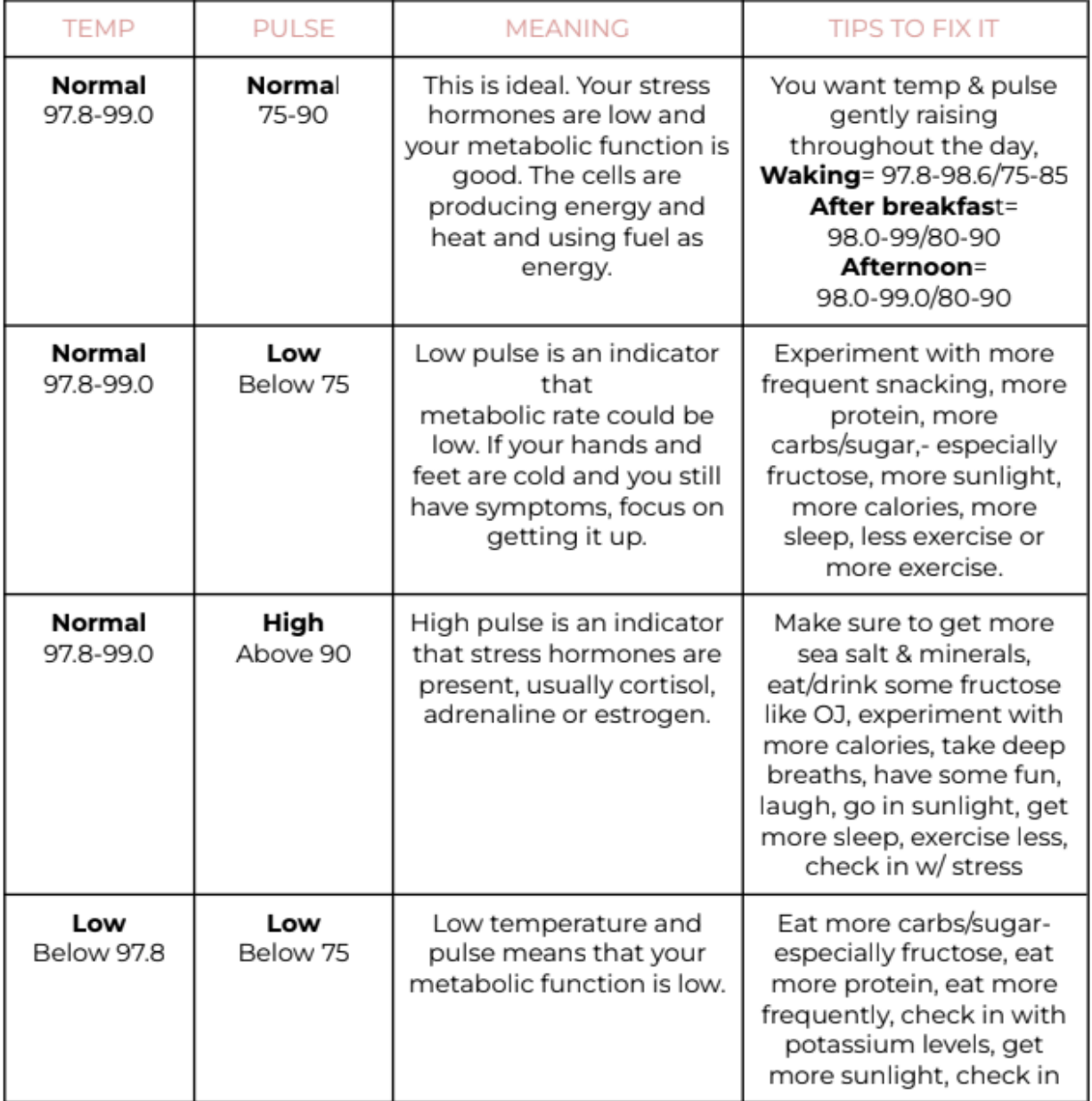
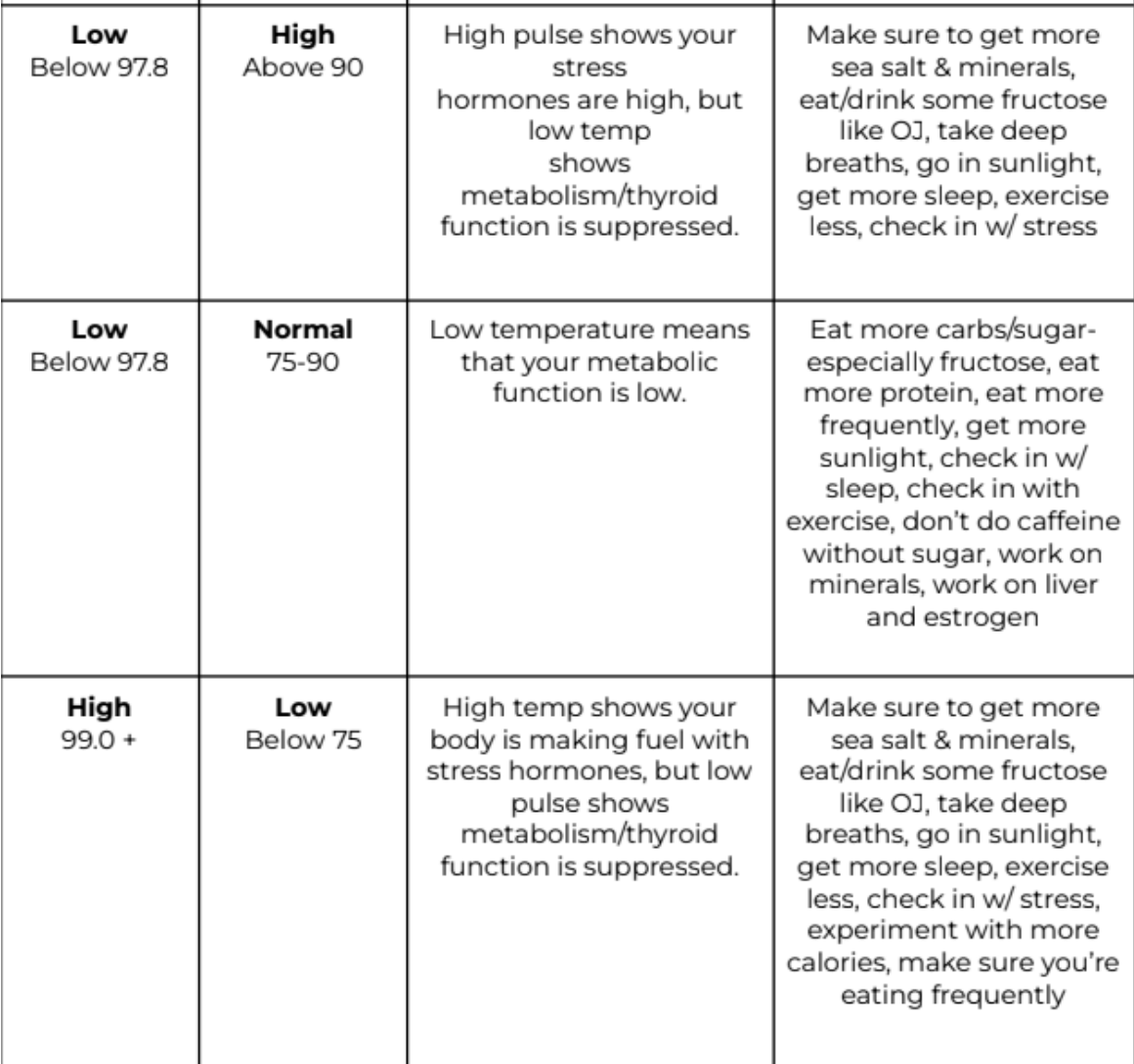
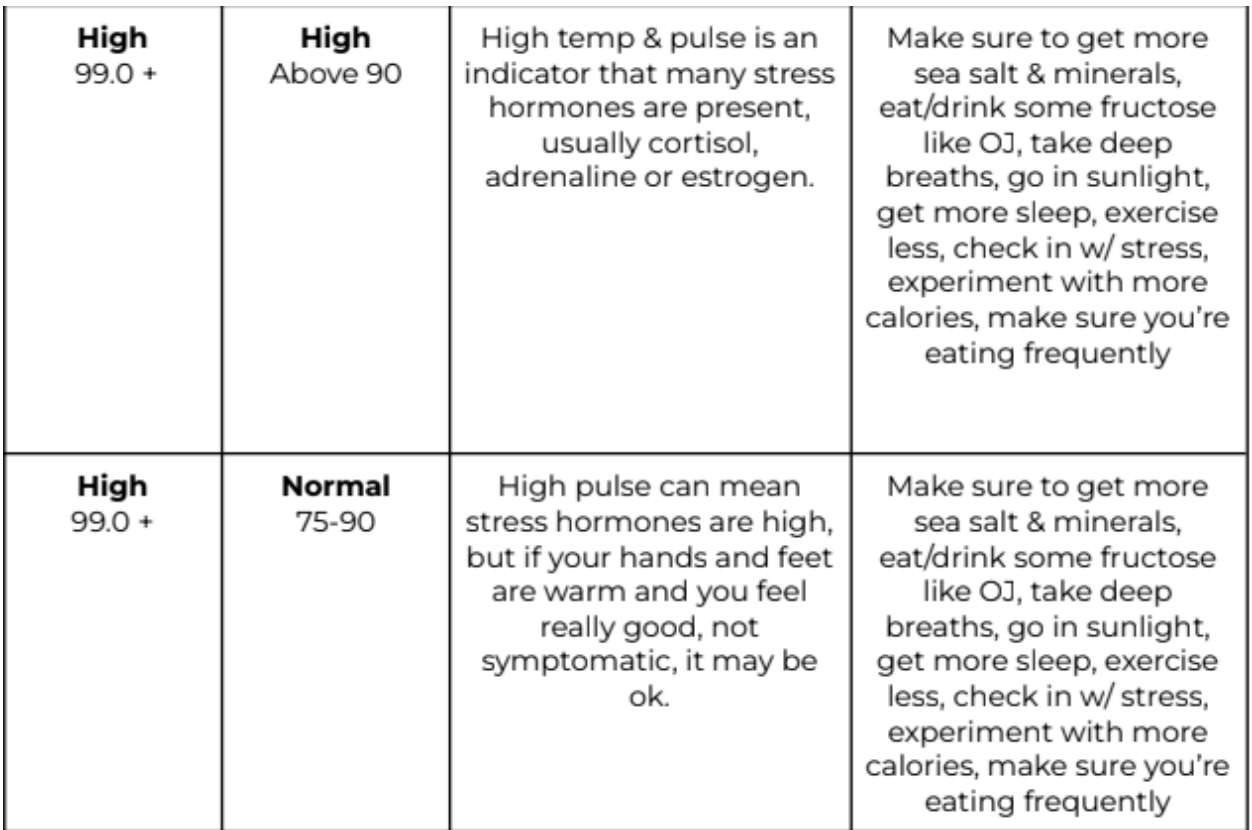
Temps + Pulse Reference Guide
The Mayo Clinic states: “Generally, a lower heart rate at rest implies more efficient heart function and better cardiovascular fitness. For example, a well-trained athlete might have a normal resting heart rate closer to 40 beats per minute.”
But is a low resting heart rate truly beneficial? Evidence suggests otherwise. Thyroid health—the thermostat of the body—plays a crucial role in metabolism. A sluggish thyroid often correlates with lower body temperatures and slower heart rates, indicators of reduced metabolic function.
Why Temperature and Pulse Matter
Metabolism refers to the sum of all biochemical reactions in the body. It’s essentially the rate of energy production at the cellular level—the speed at which your body processes and utilizes energy. Your body temperature is a reflection of this activity. People with under-functioning thyroids tend to exhibit low basal body temperatures and slower pulses, which can indicate:
Low thyroid function
Inflammation
Suppressed immune function
High stress
Estrogen dominance
Sluggish Natural Detoxification
In contrast, a warm body is linked to better immune function, better natural detoxification, efficient digestion, reduced inflammation, and overall metabolic health.
How to Track Temperature and Pulse
Tracking these metrics throughout the day provides invaluable insights into your metabolic health:
Upon Waking:
Follicular Phase: 97.2-97.8°F
Luteal Phase: 98.6°F
Resting pulse: 75-90 bpm
After Breakfast:
Temperatures and pulse should gently rise after meals. Food lowers stress and generates heat. If your numbers drop, it may indicate falsely elevated waking temps due to stress hormones like cortisol.
Afternoon:
Temperatures should peak between 1-3 PM. *You can also track your temps after a workout (wait about one hour after your workout has completed). If your temp goes lower than before the workout that workout was metabolically stressful to your body if your temps goes up that workout was metabolically supportive to your body.
Why This Matters
Using temperature and pulse as tools, you can:
Monitor how well your body utilizes energy.
Evaluate recovery from exercise.
Gain insights into hormonal balance (e.g., progesterone production and ovulation).
Identify the impacts of stress on your physiology.